
Lighting Exporter Multilingual Content Engine
Turn scattered translation and copywriting needs into a content pipeline for sustainable production.
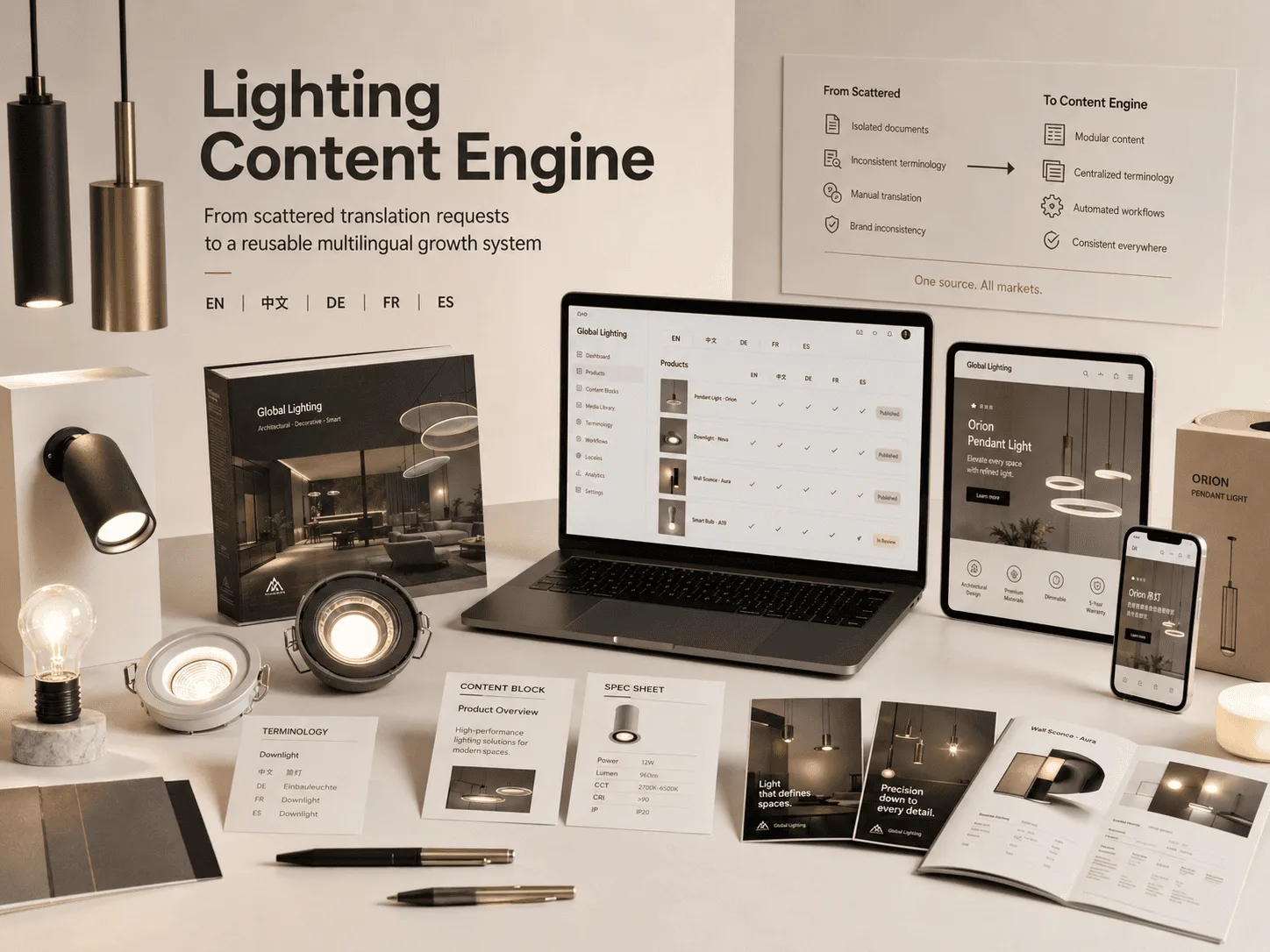
Multilingual content is no longer redone piece by piece
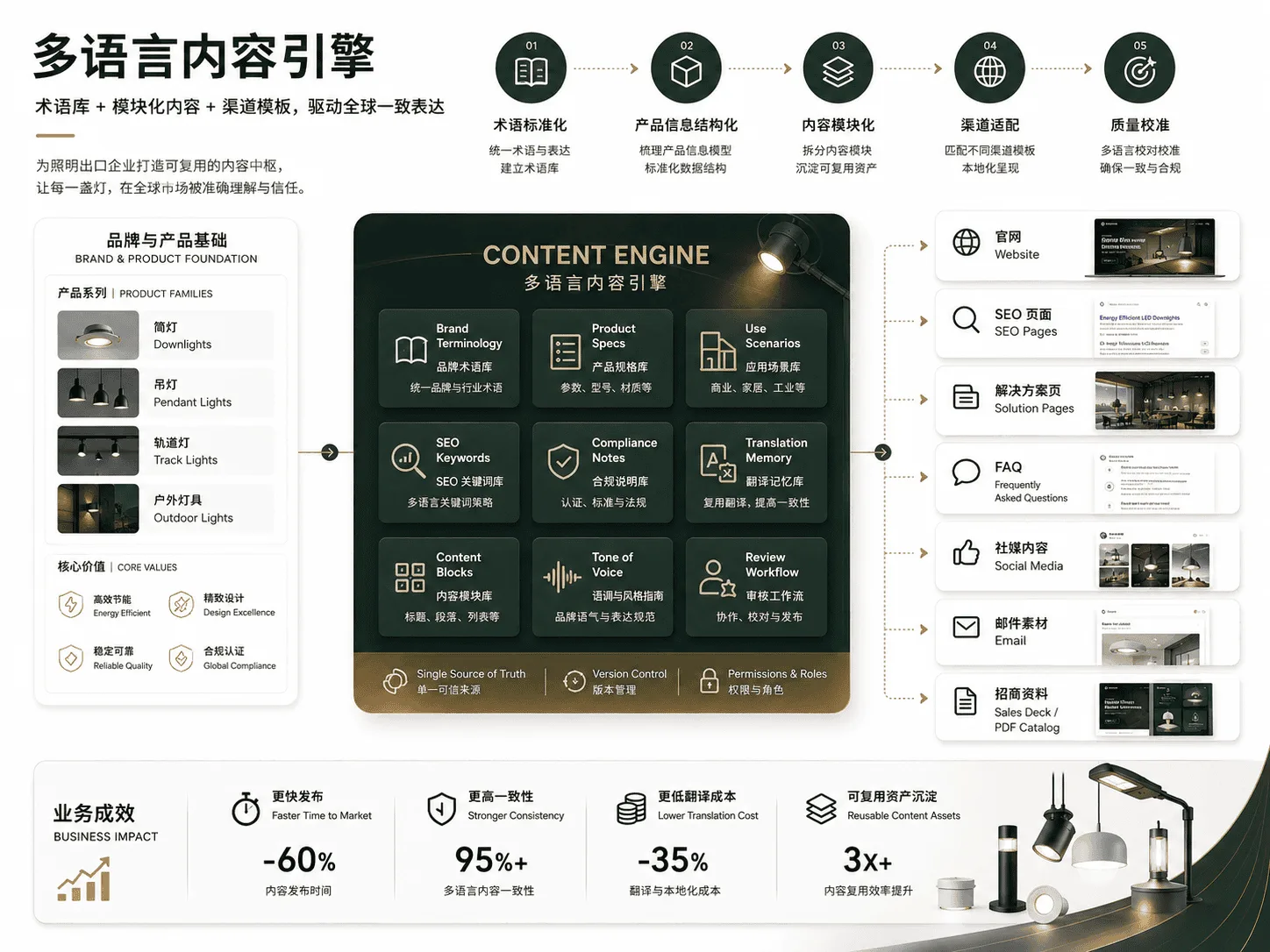
This lighting export company serves multiple countries and channels at the same time. Product information, case pages, landing pages, and social media copywriting have been handled by different personnel for a long time, resulting in inconsistent tone, high translation costs, and slow online speed. GlobalFlow integrates brand terms, product parameters, usage scenarios, SEO keywords and channel templates into a content engine so that content for different markets can be quickly generated and calibrated based on the same set of structures.
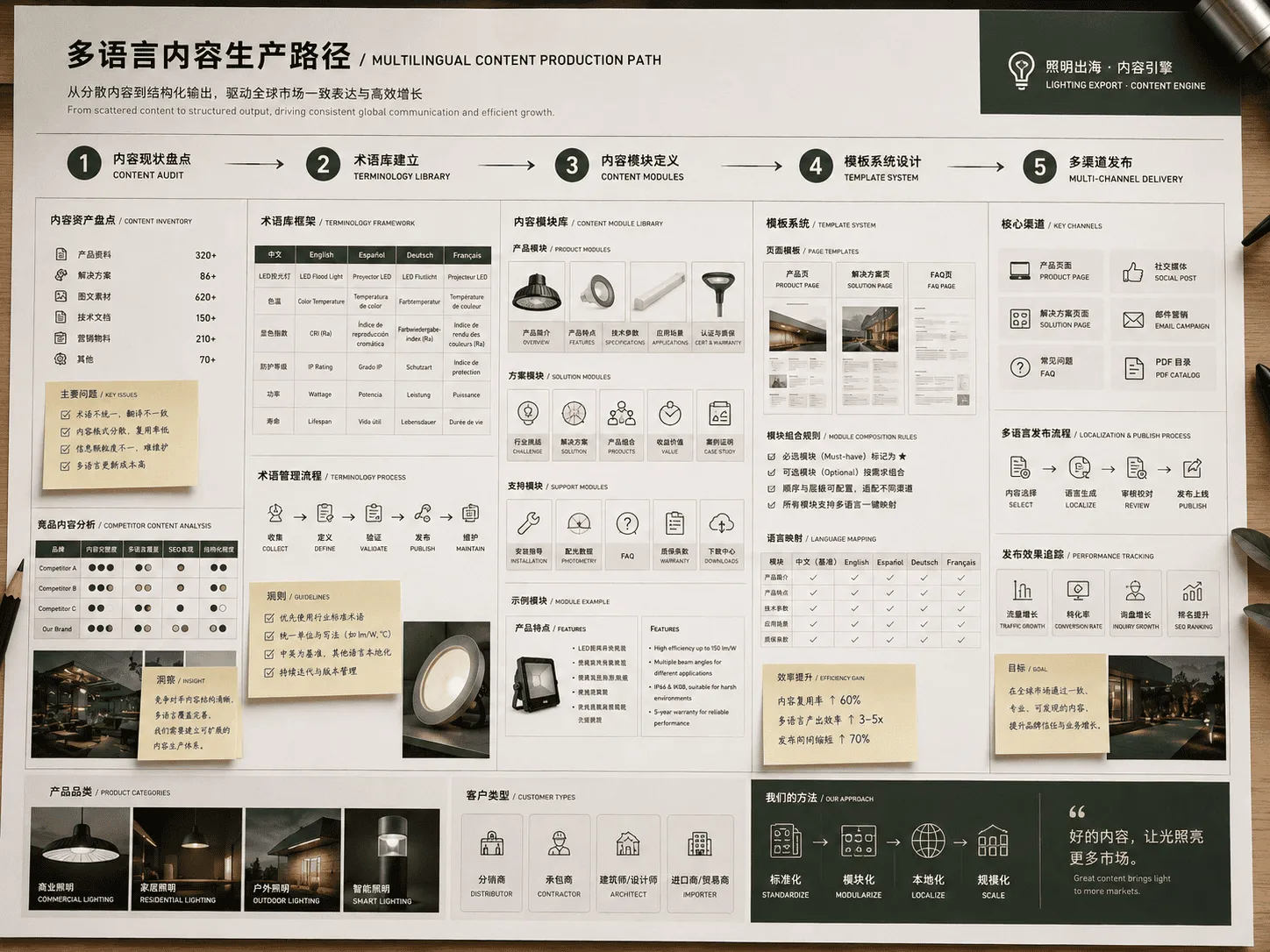
Project research
We first sorted out the company's existing catalog, product selling points, customer types and common channels, and established a Chinese and English terminology database and content module database. Then define different templates according to product pages, industry solutions, FAQs, social media posts and email materials to ensure that the content can serve search, sales and social media communication at the same time.
Core challenge
The difficulty in the lighting industry is not just translation, but also the need to keep parameters, standards, scenarios and sales techniques consistent. In the past, customers used different versions of information in different countries and markets, resulting in inconsistent descriptions of the same product on the official website, catalogs, social media, and emails, and subsequent maintenance costs were getting higher and higher.
Another challenge is that there are many types of content: product pages need to be accurate, solution pages need to cover search intent, FAQs need to answer selection questions, and social media content needs to lower the threshold of understanding. Without a unified source of content, teams would keep writing similar content over and over again, and it would be difficult to tell which version was the latest.
Process
We first build a main content library and split product parameters, application scenarios, certification instructions, FAQs and sales evidence into reusable modules. Each module is bound with terminology specifications, applicable pages, and localization considerations to ensure that both AI generation and human editing revolve around the same set of information sources.
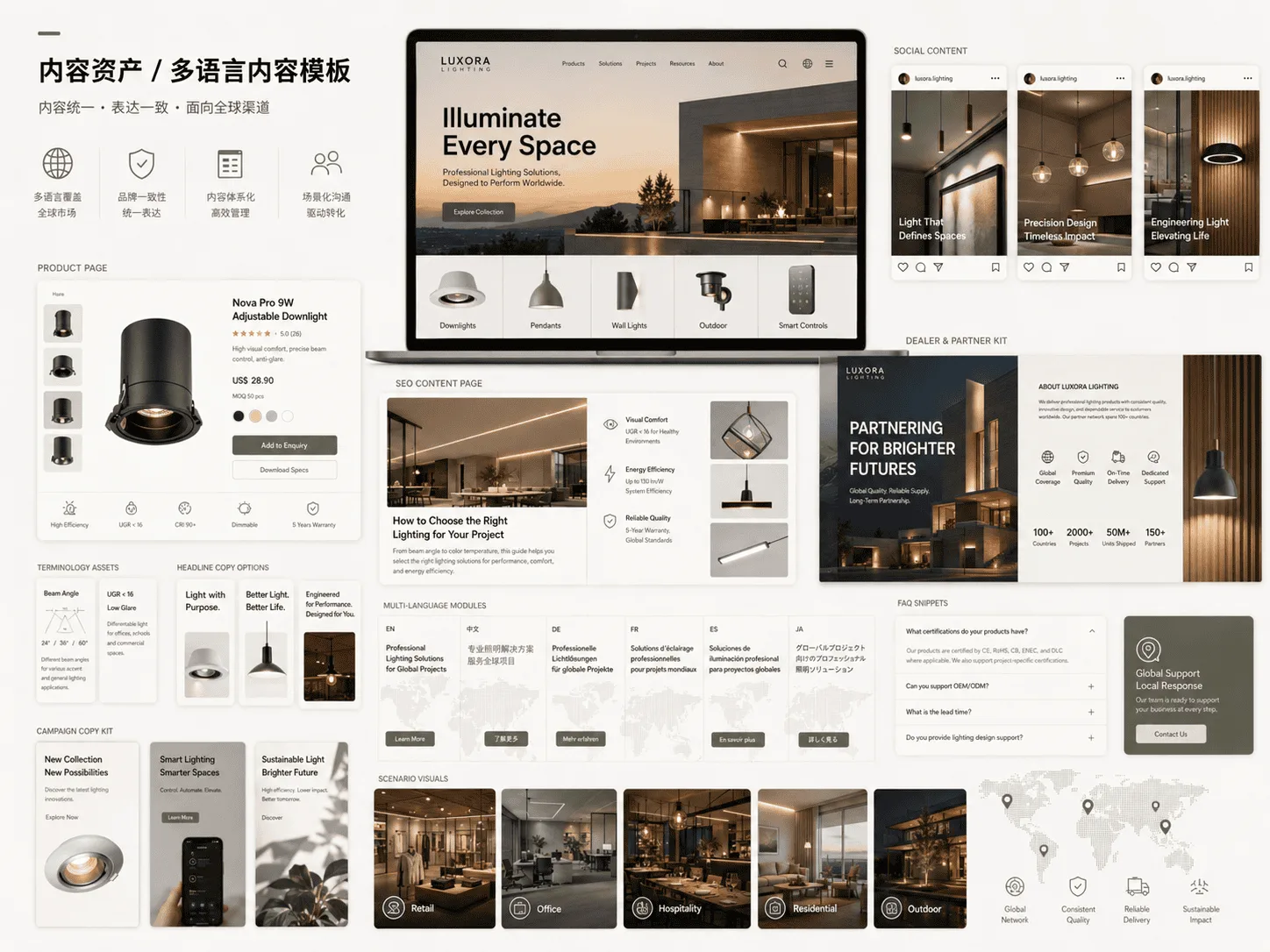
Then create page templates for key markets such as English, German, and Spanish, including category pages, product pages, solution pages, and email follow-up templates. When the team publishes new market content, it no longer simply translates it, but reassembles the modules according to market search intent and channel tasks.
Results
Content production shifts from "ad hoc translation" to "structured reuse". The team can quickly generate pages and marketing materials in different languages while maintaining accurate product information and consistent brand tone. SEO pages and social media content share the same set of material assets, reducing duplication of work.
The final deliverable is not a one-off page, but a set of growth assets that can continue to be used: brand language, content modules, page structure, channel tasks, and review metrics are placed within the same workflow. When subsequent teams add new products, enter new markets, or launch new campaigns, they can use this set of methods to reduce communication costs.
See how an AI-powered B2B growth website turns your site, content, and channels into one growth hub.