Factory-to-Brand: Full Path & GlobalFlow Methodology
Pillar page

Author:GlobalFlow Editorial. This article was written by the GlobalFlow brand growth team based on overseas brand system, content engine and SEO/GEO project experience, and was updated on 2026-05-13.
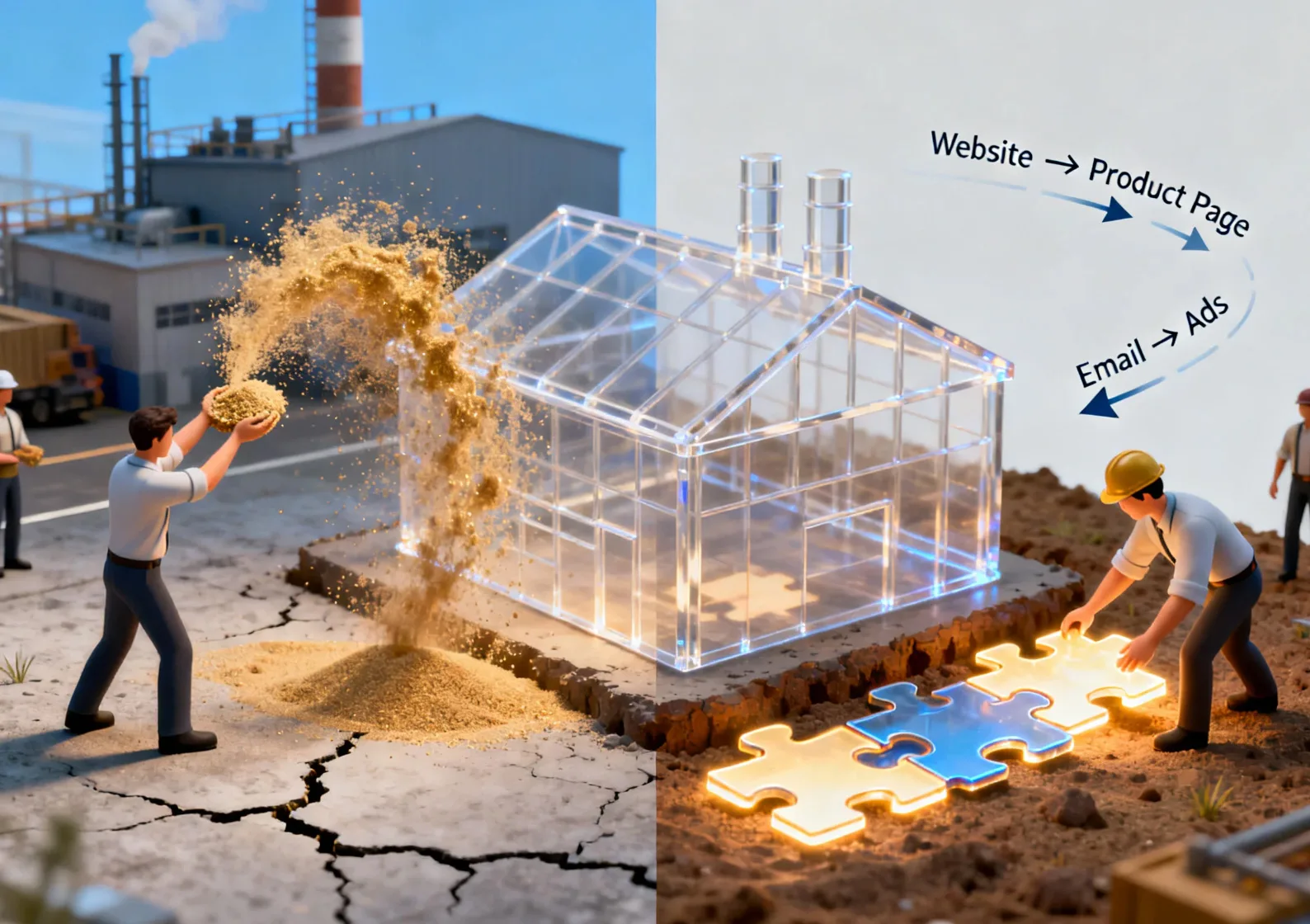
When many manufacturing companies go overseas, their first reaction is to go to the platform first, place ads first, and test popular products first. However, if the brand positioning, value expression and content structure have not been set up yet, traffic will often only bring higher trial and error costs. The key to Factory-to-Brand is not to translate products into English, but to translate supply chain advantages into brand value that global users are willing to buy.
Traffic itself does not automatically generate trust. It will only amplify the user's true feelings after entering the page: they can't understand, can't remember, there is no difference, or they are clear, credible, and have reasons to buy. For factory-based companies, product parameters, production capacity, certification and delivery experience are all important, but if this information is not organized into a clear brand narrative, buyers will still see just another supplier.
The purpose of building a brand system first is to make every exposure serve the same cognitive goal. The official website, product pages, sales materials, advertising materials, exhibition materials and email language all revolve around the same set of core information. Only then will users continue to confirm at different touch points: This company solves exactly my problem.
A mature brand system must answer at least four questions: Who are you, whose problem do you solve, what makes you different from others, and why are you trustworthy. The first question determines the category positioning, the second question determines the target market, the third question determines differentiated expression, and the fourth question determines the evidence system. If these four questions are not connected, growth actions will become fragmented execution.
GlobalFlow usually breaks down the brand system into five layers: positioning, language, visuals, content modules, and data feedback. Positioning defines the direction, language clarifies the advantages, visuals create memory points, content modules allow the team to quickly reuse, and data feedback tells the team which expressions are driving consultations, leads, and conversions.
The first step is not to redo all the pages, but to create an executable brand growth brief: target customer profiles, core scenarios, purchase obstacles, evidence materials, keyword maps, and content themes. The second step is to turn the brief into an AI-powered B2B growth website with a coherent site structure, product pages, FAQs, case studies, and advertising landing pages. The third step is to move on to multilingual, localization, and channel deployment.
This order may seem slower, but in reality it can reduce a lot of ineffective iterations. The team doesn't have to write copy from scratch every time, nor do they need to repeatedly explain 'what value we are actually selling' across different channels. The clearer the brand system, the higher the efficiency of subsequent SEO, GEO, advertising, and sales automation.
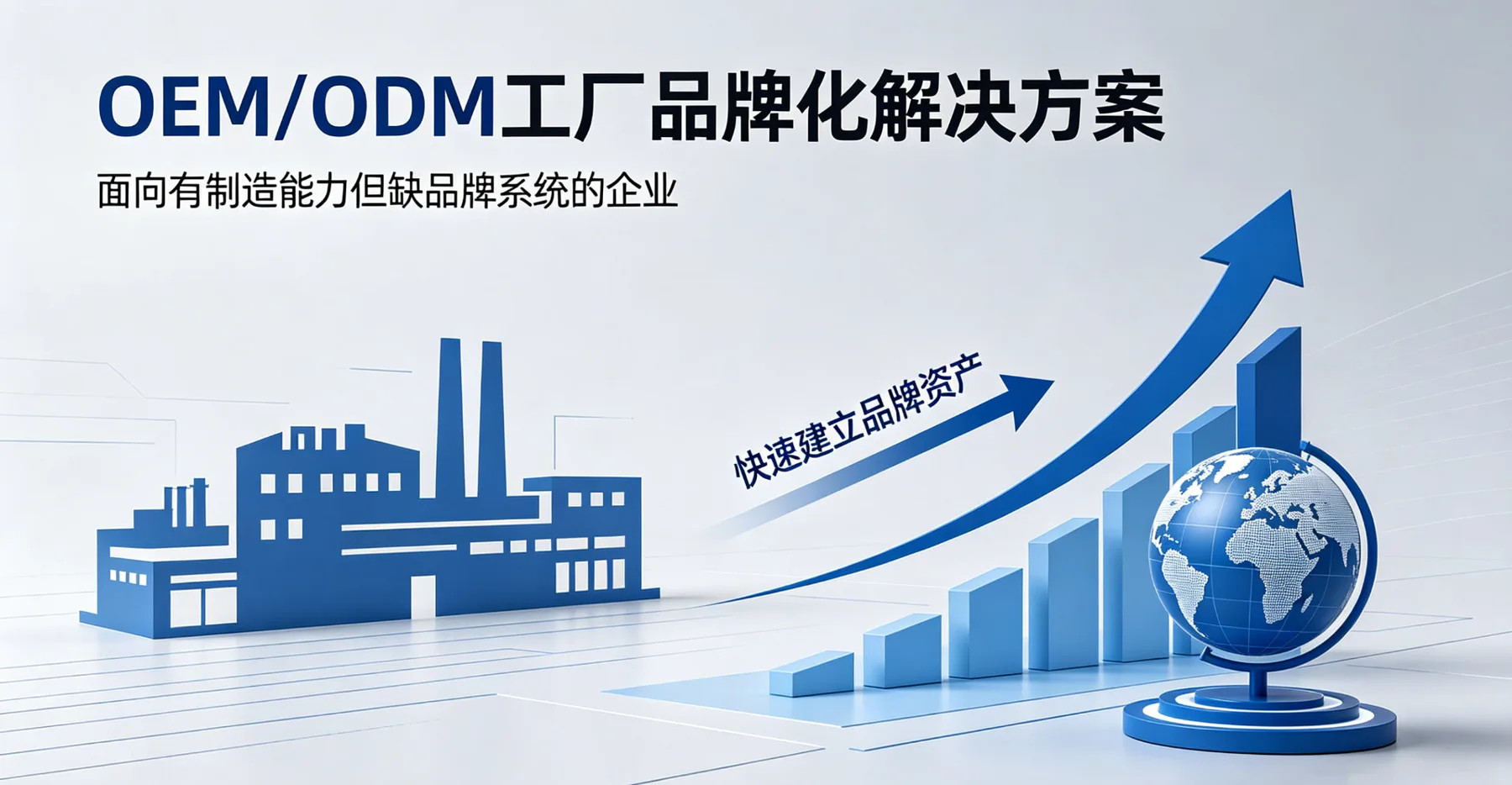
Factory-to-Brand refers to the process of a manufacturing enterprise upgrading from 'supply chain capability output' to 'brand value management.' It is not simply about changing a logo, building an independent website, or opening a social media account, but about having product definition, brand positioning, content expression, sales evidence, and data feedback operate around the same growth system.
Clear definitions are important for both AI search and traditional search. When users search for 'how factories take their brands overseas,' what they truly need is not advertising slogans, but executable paths: first clarify the category position and target customers, then establish an evidence system and content modules, and finally apply the brand expression to the official website, SEO, advertising, emails, and sales materials.
First, organize supply chain advantages: production capacity, certifications, R&D, delivery, and quality control. Second, translate into customer value: save time, reduce risk, improve experience, or enhance professional trust. Third, establish content evidence: case studies, specifications, comparisons, FAQs, testing processes, and after-sales commitments. Fourth, unify page structure: main screen value, scenario pain points, solutions, product evidence, and call to action.
This checklist can help the team determine whether the conditions for launch are met. If the website is still only talking about 'how many devices we have' without explaining 'why customers should choose you,' the more traffic there is, the more people will bounce. The purpose of the brand system is to make every touchpoint build understanding and trust more quickly.
The goal of Factory-to-Brand is not to create a beautiful website, but to enable the company to have a sustainable and reusable growth operating system. Every customer inquiry, page conversion, search exposure, and sales feedback can feed back into brand expression and content strategy. Growth no longer depends on a single hit, but is continuously calibrated by the brand system, continuously produced by the content system, and continuously optimized by the data system.
For companies with manufacturing capabilities, the scarcest resource is not the product itself, but the ability to convert product advantages into global market recognition. Building a brand system first is the first step to making good products seen, understood, and chosen.