Factory-to-Brand: Why Build a Brand System Before Global Growth
2026-03-09

By GlobalFlow Editorial. This is the GlobalFlow Factory-to-Brand pillar page, written by the brand growth team based on OEM/ODM transformation project experience and industry research. Continuously updated.
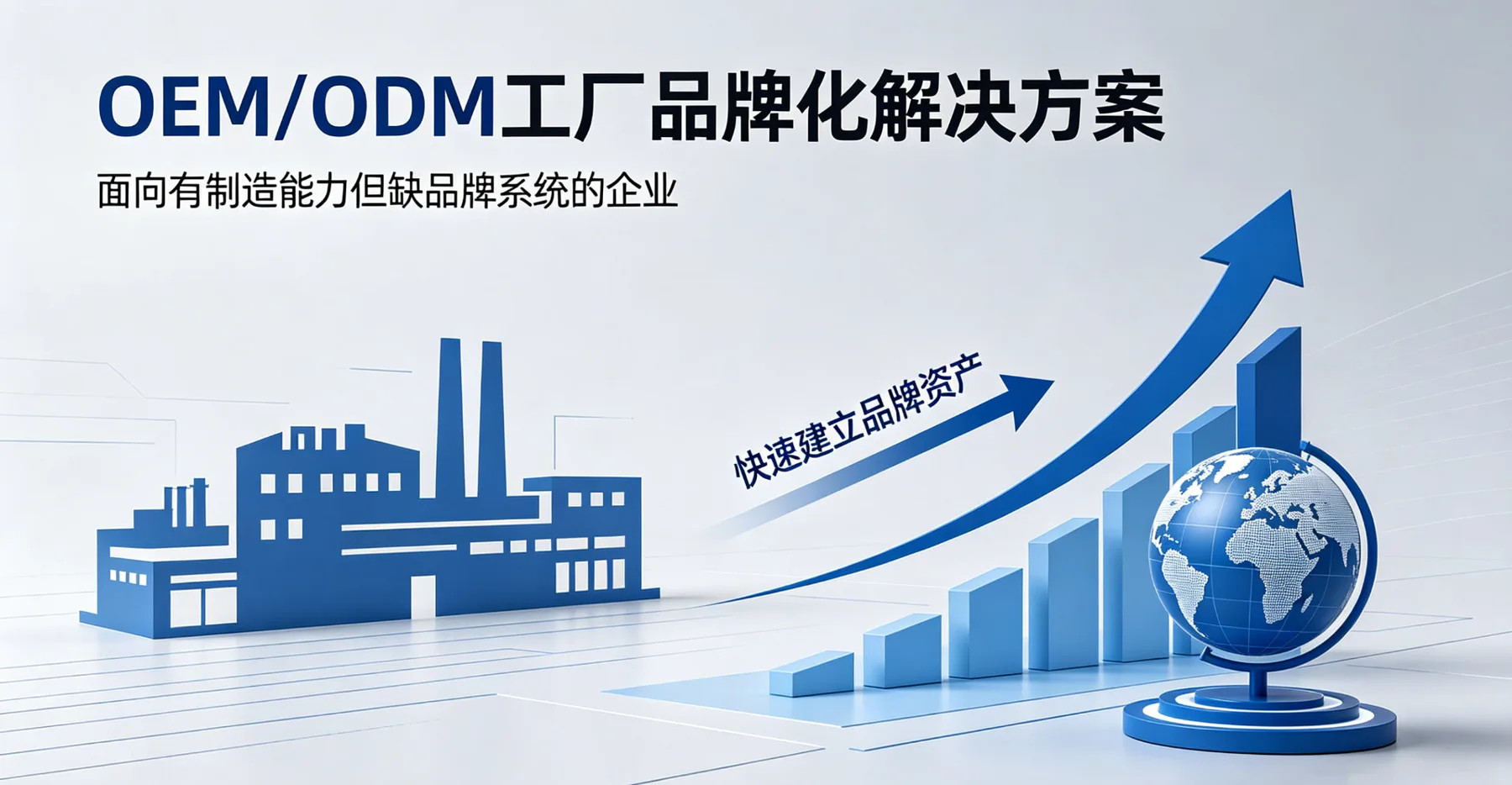
Factory-to-Brand (F2B) is a branding-driven growth methodology designed for Chinese OEM/ODM factories. Its core premise: Chinese factories don't lack product capability — they lack a system to translate manufacturing strengths into brand value. F2B isn't about swapping logos, launching a website, or opening social media accounts. It's a complete operating system spanning brand positioning, evidence systems, content engines, independent site architecture, and marketing automation.
Under the traditional OEM model, factories earn manufacturing margins — produce to client specifications, deliver, and it's done. Under the F2B model, factories earn brand premiums — product definition, brand narrative, customer relationships, and repurchase data all belong to them. F2B's goal isn't to make factories "look like a brand" — it's to equip them with the capability to continuously operate as one.
Global sourcing logic is undergoing structural change. On one hand, overseas buyers increasingly prefer suppliers with brand capability — they don't just need products, they need brand stories, marketing materials, and localized content support. On the other hand, platform traffic costs continue to rise, and the profit margin of pure order-taking continues to shrink.
The deeper problem: under the OEM model, customer relationships and product data are someone else's assets. When an order ends, what accumulates is the buyer's brand value, not yours. Under the F2B model, every customer inquiry, every page visit, every content distribution builds recognition assets and growth data for your own brand.
Simply put: contract manufacturing earns today's money. Brand building earns tomorrow's money. Factory-to-Brand makes the path between "today" and "tomorrow" executable and measurable.
F2B isn't an overnight transformation — it's phased capability building. Based on GlobalFlow's experience serving manufacturers, the complete F2B path consists of four phases:
Catalog supply chain strengths (capacity, certifications, R&D, delivery). Define target customer profiles and category position. Deliver brand positioning document, core message house, and differentiation statement. This phase answers: who you are, whose problem you solve, and why choose you.
Build brand evidence: case studies, spec comparisons, certifications, test reports, FAQs, and customer testimonials. Construct content architecture: define core page structure, keyword maps, multilingual content strategy, and SEO/GEO framework.
Based on the brand system and content architecture, build the brand independent site. Use the AI content engine (FlowContent) to batch-produce multilingual pages, blog posts, product descriptions, and FAQs. Configure SEO schema, OG tags, hreflang, and AI search optimization.
Connect SEO/GEO, SEM, social media, EDM, and influencer marketing channels. Orchestrate automated growth workflows via FlowMarketing. Track conversion sources and content performance via FlowData. The brand system begins self-calibration: data feeds content, content drives conversion, conversion refines positioning.
When factories think about going global, the first reaction is often "I need a website." But the website is just the surface — without solving the underlying questions, it becomes another digital asset that costs money without producing results.
| # | Question | Why It Must Be Answered First |
|---|---|---|
| 1 | What does your brand stand for? | Without clear positioning, your site is just a product catalog. Users who can't identify what you are in 3 seconds will leave. |
| 2 | Who is your target customer and where are they? | This determines your site's language, structure, content style, and promotion channels. Targeting US wholesalers vs. Southeast Asian retailers requires entirely different strategies. |
| 3 | What evidence proves you're the best choice? | Case studies, certifications, test data, customer testimonials — brand narrative without evidence is just self-promotion. |
| 4 | Who will continuously produce content? | An independent site requires ongoing ownership for product facts, cases, FAQs, technical maintenance, and search updates. Confirm the responsible team and review rhythm before launch. |
| 5 | How do you measure ROI? | From inquiry sources to page conversion to content performance, you need a data tracking system. Otherwise you won't know which investments are working. |
This is the question every factory faces when going brand-first. The answer isn't which platform is "better" — it's about your stage and needs.
Shopify may fit: Teams prioritizing managed commerce, catalog operations, checkout, and an established app ecosystem. Confirm localization, content, integration, and data requirements before choosing a plan and theme architecture.
WordPress or a custom static site may fit: Teams prioritizing editorial depth, flexible information architecture, multilingual content, and greater implementation control. This path also requires explicit ownership for hosting, security, releases, and maintenance.
Decision rule: Choose against documented requirements for transactions, content, localization, integrations, operations, compliance, and data control. The platform does not create positioning, evidence, demand, or follow-up by itself; those remain part of the operating system around it.
An actionable F2B implementation checklist to help teams assess current status and next steps:
| Module | Completion Standard | GlobalFlow Module |
|---|---|---|
| Brand Positioning | Clear category position, target persona, differentiation, and brand story | FlowBrand |
| Brand Expression | Visual system, tone of voice guide, core message house ready | FlowBrand |
| Evidence System | Case studies, spec comparisons, certifications, FAQs, test reports compiled | FlowContent |
| Site Architecture | Clear page structure, complete SEO schema, multilingual support, mobile optimized | FlowContent |
| Content Engine | Ongoing content production process (blog/cases/FAQ/whitepapers), not one-time delivery | FlowContent |
| SEO/GEO | Keyword map, sitemap, hreflang, schema, llms.txt, AI-citable content blocks ready | FlowContent + FlowMarketing |
| Growth Channels | At least 2 channels (SEO + SEM + social + EDM) operating steadily | FlowMarketing |
| Data Loop | Complete tracking: source → page → conversion → repurchase | FlowData |
| Workflow Automation | Content publishing, customer follow-up, data reporting have reusable SOPs or automated workflows | FlowStore |
International buyers need verifiable reasons to trust the product and the supplier. Prepare these assets before scaling content or campaigns; where evidence is missing, label it as a validation task rather than turning it into a marketing claim.
For a worked example of how evidence becomes a buyer-facing narrative, review the consumer electronics growth-system case. Case content explains the method and should not be read as a forecast for another company.
The traditional F2B path relies on coordination between brand consultancies, content agencies, and advertising agencies. The problem: consultancies deliver PPTs, content teams deliver articles on a project basis, and ad agencies charge by spend. Three separate logics operating in silos — the brand system can't form a closed loop.
GlobalFlow's solution integrates F2B's five core modules — FlowBrand (brand system), FlowContent (AI content engine), FlowMarketing (marketing automation), FlowData (data flywheel), and FlowStore (workflow engine) — into a single Brand Growth OS. This means:
For Chinese factories, F2B's biggest challenge isn't "not knowing brand matters" — it's "not knowing where to start" and "having no one to sustain it." GlobalFlow Brand Growth OS solves both: the AI brand diagnosis tool tells you where to start, and the five modules keep you running continuously.
It is most relevant to OEM/ODM manufacturers with a stable product and supply chain, evidence they can publish, and a team willing to own market, compliance, and sales decisions. Revenue alone is not a readiness test.
Timing depends on product evidence, target-market validation, approvals, existing assets, and technical scope. A diagnosis should define staged outputs and validation gates; search visibility and commercial results do not have a guaranteed schedule.
A small team can begin, but AI does not replace accountable product, compliance, market, and sales owners. GlobalFlow uses AI to assist research, drafting, and workflow orchestration, with human review before claims or campaigns are published.
Yes. Platforms are traffic channels, but brand assets and customer data belong to the platform. An AI-powered B2B growth website is your own brand asset and the content hub for SEO/GEO. We recommend using the independent site as your brand core with platforms as sales channels — forming a dual-engine strategy.
GlobalFlow combines a governed brand system, AI-assisted content workflows, SEO/GEO work, marketing automation where appropriate, and measurement. Delivery scope is agreed by project, while public claims and commercial decisions remain human-reviewed.
This page combines GlobalFlow's internal operating framework with public guidance such as Google Search Essentials and official Shopify and WordPress documentation. The readiness questions and four phases are planning tools, not benchmarks or guaranteed outcomes. Product claims, market demand, compliance, timing, and results must be validated for each manufacturer.
Use the AI brand system guide to understand what AI can generate and what still needs human validation.