
Customers & buying context
Use authorized interviews and inquiries to map decision roles, use cases and buying barriers. Deliver a customer-voice summary and decision map, separating quotes from interpretation.
FLOWBRAND · BRAND STRATEGY & AI COLLABORATION
Move from what you can manufacture to why a customer should choose your brand. FlowBrand connects research, strategy, verbal and visual expression, and governance into a practical foundation for international growth.
AI supports research and drafts. Specialists guide decisions; your team approves facts. Scope, languages and delivery cadence are agreed after diagnosis.
Discovery
Find a starting point in your customers, competitors and current brand. Keep findings sourced and unproven ideas marked for validation.

Use authorized interviews and inquiries to map decision roles, use cases and buying barriers. Deliver a customer-voice summary and decision map, separating quotes from interpretation.
Compare competitors and alternatives on value, price presentation and evidence. Develop positioning hypotheses with source notes.
Review your website story, SEO and AI-search citability. Use GSC / GA4 data where authorized to establish a baseline and prioritize issues.
Strategy
The Brand Canvas sets direction; the Message House aligns communication. Give design, sales and content teams a shared, evidence-backed foundation.
Define whom you serve, where you compete and why customers should choose you.
Organize your core promise, value pillars and supporting evidence into a consistent message.
Core promise: clear, relevant and substantiated
Evidence: specifications / tests / certifications / authorized cases / customer feedback
Expression
Turn brand strategy into practical guidelines for sales, website and design teams.
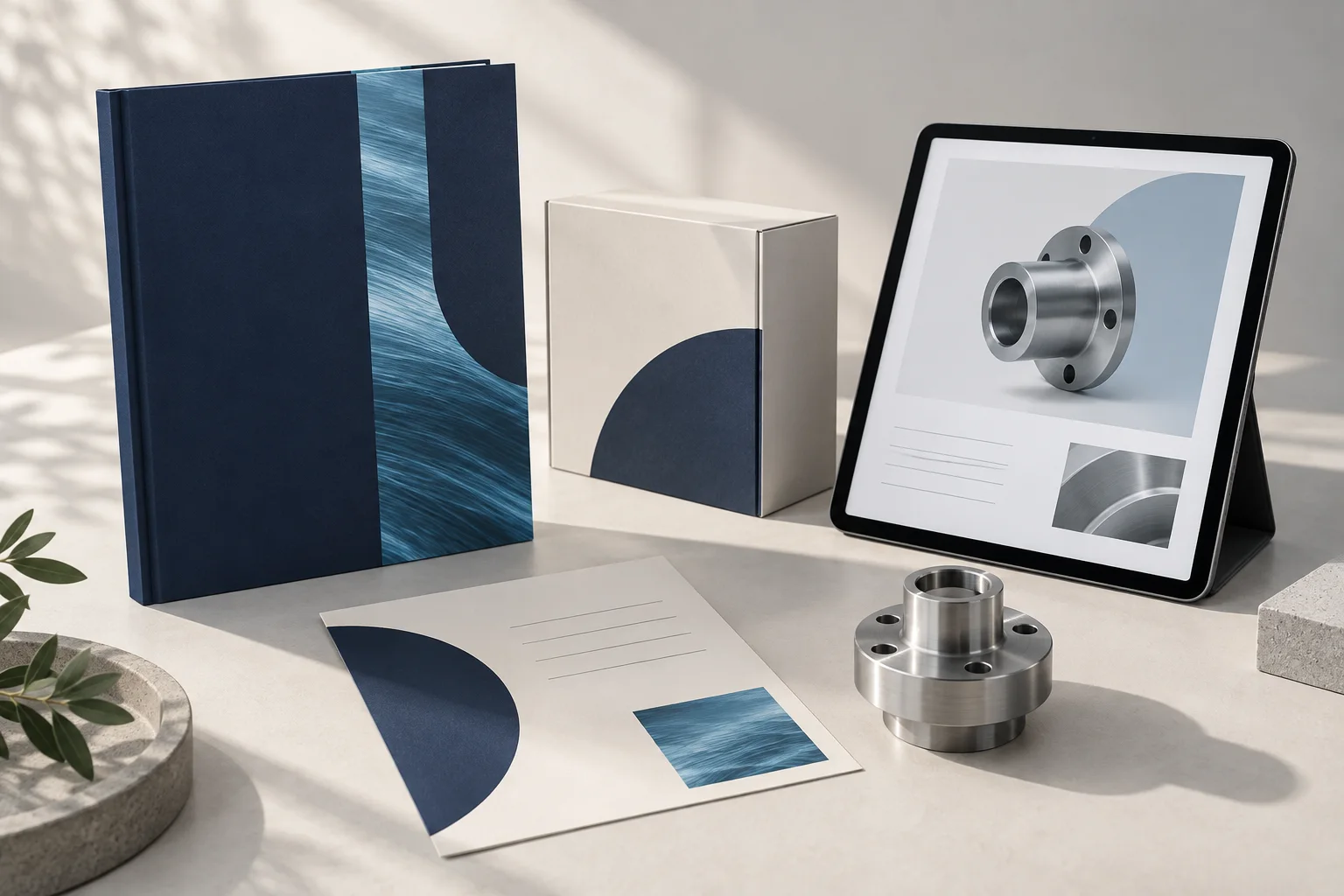
Develop the story, naming and tagline directions, tone and terminology. Adapt to each market; your business verifies facts, names and claims.
Set color, typography, photography and graphic directions. Deliver a visual brief, VI scope and creative briefs for priority touchpoints.
Organize benefits, use cases, evidence and calls to action into product messaging templates and online / offline channel guidelines.
Full logo / visual identity design, packaging, photography, video production and trademark searches are scoped separately where required. Naming recommendations do not establish registration availability.
Governance
Organize approved facts, terminology, voice and usage limits into a brand reference pack. Give AI and collaborators consistent inputs, maintain versions and review work before publication.
Record specifications, certifications, markets and publishable cases with their sources and approval status.
Align brand and product names, terminology, tone and claims that must not be made without evidence.
Business owners approve facts, brand owners approve expression, and specialists review matters within their remit.
Keep revision reasons, owners and versions; incorporate real feedback into subsequent updates.
Agree sources, review responsibilities and acceptance criteria, then use the approved brand reference to guide production and publication.
Engagement & delivery
Start with a diagnosis, or scope a full project around a launch, a target market or a move from OEM to brand. Agree on inputs, owners and acceptance criteria before moving to the next phase.
Brand baseline, voice of customer, competitor and opportunity maps. Agree on the problem and research gaps.
Brand Canvas, positioning, value proposition and Message House. Review audiences, differentiation and evidence.
Brand story, voice guide, visual and content briefs. Develop priority samples within the agreed scope.
Approve facts and expression; deliver a versioned reference pack, channel rules and a 90-day action roadmap.
Clarify positioning, messaging and credibility gaps.
Project pricing for a diagnosis, priorities and action recommendations. A brand rebuild is not included by default.
Develop brand direction through AI-assisted research and expert collaboration.
Project pricing for agreed positioning, Message House, verbal and visual briefs. Websites, ads, full visual identity and production are scoped separately.
Keep expression consistent across teams using an established brand foundation.
Agreed monthly scope for brand reviews, content briefs and feedback reviews. This is not all-channel managed operations.
Scope depends on markets, research depth, languages, assets and review rounds. Diagnosis and brand strategy are project-priced; ongoing collaboration has an agreed monthly scope. Any setup fee, initial total, third-party costs and payment milestones are itemized before signing. See all engagement paths and fee boundaries
Put your brand foundations into ongoing operations
Common questions
FlowBrand is a brand service supported by AI-assisted research, structured templates and expert collaboration. AI can support research and drafts; positioning decisions, fact approval and publication review are handled jointly by specialists and your business.
Start with a diagnosis. If the gaps are positioning, information hierarchy or evidence, address those first. Visual or website changes are considered when the current assets cannot support the agreed strategy.
Depending on scope: research summaries, Brand Canvas, positioning and value proposition, Message House, brand story, voice and terminology guides, visual and content briefs, review checklists and a versioned reference pack. Full visual identity, packaging or video production require a separate scope agreement.
Research and expression can be planned for your priority markets. The number of languages, localization depth and local review responsibilities are agreed at kickoff. Market adaptation involves more than literal translation.
We separate client-provided facts from external research, retain sources and flag uncertain findings for validation. Your team checks product facts and permissions; specialists review expression. Unapproved claims are not treated as official brand promises.
FlowBrand can use search diagnostics to identify brand information gaps and produce channel briefs. Ongoing content production, technical optimization, advertising and operations are scoped through the relevant modules. Advertising spend is not included by default.
Scope depends on markets, research depth, languages, assets and review rounds. Diagnosis and brand strategy are project-priced; ongoing collaboration has an agreed monthly scope. Any setup fee, initial total, third-party costs and payment milestones are itemized before signing.
No. FlowBrand provides evidence-informed positioning, practical brand assets and a review process. Sales, rankings and inquiries also depend on products, channels, competition, budget and sustained execution.
Identify the brand problem that matters most, then agree on the research, deliverables and way of working.