AI Brand Generator for Export Manufacturers
2026-07-25
For market research, positioning, expression and brand governance together, explore FlowBrand’s full brand-system engagement.

By GlobalFlow Editorial. This is the GlobalFlow AI Brand System pillar page, written by the brand growth team based on FlowBrand product design experience and brand methodology research. Updated regularly.
This page explains how product information, target markets, supply-chain strengths and competitive context can be organized into research questions, positioning options, brand stories, slogans and visual-direction drafts. AI assists with organization and drafting; it does not make final strategy decisions or verify company facts.
Drafts help a team identify unanswered questions, compare directions and record revision rationale. Market evidence, product claims, trademark availability, compliance requirements and external promises still require review by the responsible people.
When a company needs research, positioning, language and visual direction, and brand governance as a formal engagement, explore the FlowBrand brand service with AI-assisted collaboration and agree the scope after diagnosis.
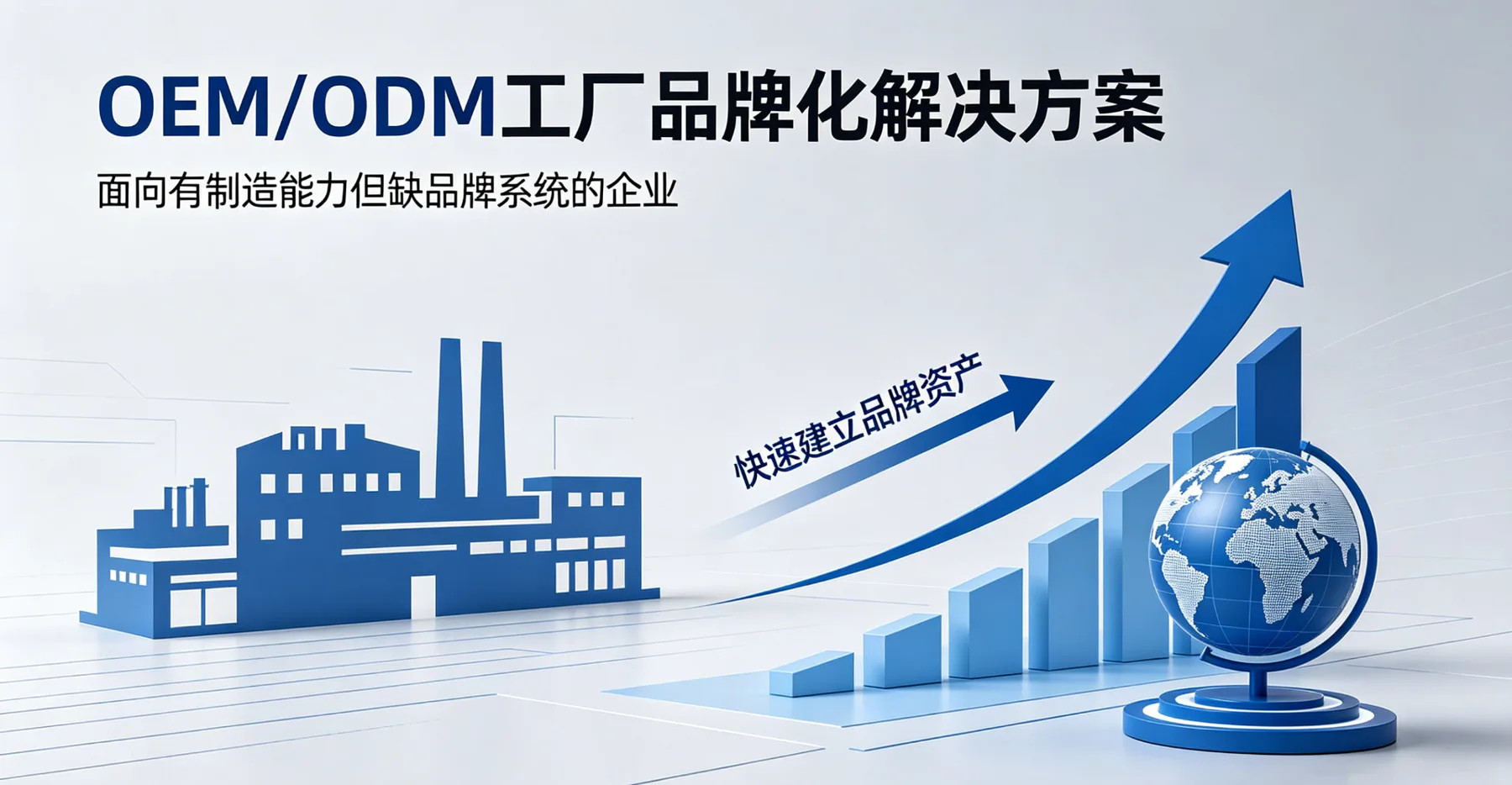
This is the most common misconception in factory branding. Many factory owners think "building a brand means designing a logo, printing it on products, and building a website." A logo is the result of brand expression, not the starting point of brand strategy.
The core brand question isn't "what does it look like" — it's: Who are you solving what problem for? Why choose you over competitors? What values and promises do you represent? Logo and visual systems only become meaningful after these questions are answered. Otherwise, it's like painting the walls of a house with no foundation — it looks good, but won't withstand market testing.
An AI-draft workflow starts with product information, audiences and supply-chain strengths, then helps organize positioning options and messaging architecture before drafting stories, slogans and visual direction. Specialists and the company must check strategic logic, evidence and market context at each stage.
The company provides product, customer, factory and market facts; AI can help organize the following drafts. They are not approved brand assets, and complete deliverables depend on the agreed FlowBrand scope.
| Input (What You Provide) | Drafts AI Can Help Organize |
|---|---|
| Product category, core specs, production capacity | Brand Positioning Document: Category position, target customer profile, differentiation, core messaging architecture |
| Target markets, target customers, competitor info | Brand Story: Founder narrative or category narrative, mission & vision, brand values |
| Supply chain strengths, certifications, R&D capabilities | Slogans & Value Propositions: Multiple slogan versions (English/Chinese), one-line value proposition, brand manifesto |
| Industry references, style preferences (optional) | Visual Direction Suggestions: Color system recommendation, typography direction, logo concept direction, brand visual keywords |
| Brand positioning + visual direction (after review) | Brand-asset outline: approved content, open questions and downstream design requirements |
Recommended workflow: organize product and market materials → use AI to assist with research questions and direction drafts → specialist and company review → provide approved material to website, content and design teams. Scope a FlowBrand engagement separately when a complete brand service is required.
This is the first question everyone asks when they encounter an AI brand system. The answer: AI can assist with strategic frameworks, content and visual-direction drafts, but it cannot complete a brand independently; people make the decisions and the company approves them.
Specifically, what AI is good at:
What AI isn't good at — or rather, what shouldn't be fully delegated to AI yet:
GlobalFlow's position: FlowBrand is not designed to replace brand strategy — it's designed to make strategy executable and iterable. The optimal workflow is: AI generates the draft → humans review and calibrate → finalize and publish → market feedback → AI iterates and optimizes. This loop transforms brand building from a "one-time project" into "continuous operations."
Draft quality depends on source materials, research scope and review depth. The workflow below does not promise a fixed completion time:
| Stage | Output | Status |
|---|---|---|
| Source review | Brand positioning draft: category position, customer profile, differentiation | Ready for internal discussion |
| Expression drafts | Brand story + mission & vision + multiple slogan versions | Usable for internal brand alignment |
| Visual brief | Visual direction + color system + typography suggestions | Ready for designer execution |
| Version review | Brand-asset draft and open questions | Needs human review before finalization |
These outputs remain reviewable drafts for internal discussion and design briefs. Before publication, check facts, evidence, language, trademarks and compliance. Actual timing depends on source completeness, languages, decision-makers and review rounds.
This page provides method guidance and preparation information. FlowBrand adds research, specialist judgment, company review and brand-asset governance within an agreed scope:
| Stage | AI-Draft Information Entry | FlowBrand Brand Service |
|---|---|---|
| Scope | Organize product materials and research questions | Agree markets, research depth, languages and review |
| Positioning | Assist with comparable direction drafts | Specialists guide trade-offs; the company decides |
| Expression | Story, slogan and visual-direction drafts | Scoped language and visual briefs with review checks |
| Version control | Record drafts and open questions | Retain sources, owners, revision reasons and approvals |
| Multilingual | Assist with drafts in different languages | Agree localization and review by target market |
| Downstream use | Internal discussion or a design brief | Approved assets support website, content and design teams |
| Best fit | Early problem framing and initial directions | Systematic research, formal assets and governance |
A draft is not consulting, a complete identity system, trademark advice or an approved brand playbook. Research, design and production needs are confirmed individually after diagnosis.
The following workflow shows where AI can assist and what people must validate at each step:
Based on your product category and target market, AI analyzes typical positioning patterns, competitive landscape, and differentiation space. For example, the lighting category typically competes on three dimensions — "energy efficiency," "design," and "smart features" — and AI helps you find which dimension best matches your supply chain strengths.
AI builds a customer needs map based on target market and customer type (wholesaler / retailer / DTC end consumer). Different customer types have fundamentally different decision logic — wholesalers care about capacity and certifications, end consumers care about design and brand story. FlowBrand ensures brand positioning has targeted expression for each audience.
AI synthesizes category analysis and customer profiles to generate 3–5 differentiated positioning directions to choose from. Each direction includes: one-line positioning, core customer segment, primary differentiation point, and why customers should believe you. This is the key moment for human review and decision-making.
Once a positioning direction is selected, AI expands into a complete brand narrative: brand story (founder narrative or category narrative), mission & vision, brand values, brand personality, and tone guide. Both English and Chinese versions are generated simultaneously to ensure cross-language consistency.
Core expressions are extracted from the brand narrative, generating multiple slogan versions (short version for website hero, long version for brand intro, and social media adaptations). Every slogan traces back to the core logic of the brand positioning — they aren't arbitrarily generated wordplay.
Chinese manufacturers don't lack great products. What they lack is a system that can translate product capability into brand expression. The high barriers of traditional brand building — budget, team, time — have deterred most factories.
GlobalFlow uses AI for research organization, option generation and draft comparison, leaving strategic trade-offs, fact validation, context and company decisions to people. Together they form a reviewable brand workflow.
What FlowBrand outputs isn't just brand documents — it's the starting point for subsequent brand growth:
This is the core philosophy of Brand Growth OS: brand isn't a one-time creative project — it's a continuously-running growth operating system.
AI can help organize positioning options, brand stories, slogans and visual-direction drafts, but it cannot independently complete brand strategy or verify company facts. FlowBrand supports a full service with AI-assisted research, structured templates and specialist collaboration; the company confirms facts and gives final approval.
A logo is the result of brand expression, not the starting point of brand strategy. Teams should first clarify the audience, customer problem, differentiation and evidence, then develop language and visual direction. AI can assist with drafts; specialists and the company still make positioning decisions, confirm facts and approve design.
This page is a method and information entry for AI-assisted brand drafts, not a complete consulting deliverable. A FlowBrand engagement can add market research, specialist judgment, company review, brand-asset organization and version management within an agreed scope. Timing, deliverables and fees are confirmed after diagnosis.
This page is useful for OEM/ODM manufacturers, export brands and startups that need to organize brand questions and initial directions. Teams needing full research, positioning, language and visual briefs or brand governance should scope a FlowBrand engagement after diagnosis.
Unverified AI output should not be used directly. Positioning, stories and slogans are drafts until a brand owner or specialist checks product facts, evidence, trademarks and market context, and the company approves publication.
No. This page provides method guidance and preparation information for AI-assisted brand drafts. FlowBrand is a brand service combining AI-assisted research, specialist collaboration and company review; scope, timing and fees are confirmed after diagnosis.
This page follows the current GlobalFlow FlowBrand service scope to explain the inputs, outputs and review boundaries of AI-assisted drafts. It does not provide fixed timing, cost or outcome benchmarks. Company facts, research conclusions and public claims must be verified before use.
2026-07-25
2026-06-22